Starting a Vegetable Garden
The aim of this page is to show that it can be extremely easy to start
a vegetable garden. If you don't have any actual ground to grow things
in, that
is no problem, you can start a box garden.
Alternatively, if you have some space available, but no soil, you
could start a "no-dig" garden. (I will add a page about this
eventually.)
The important thing is to get started growing stuff, without worrying
too much about getting it exactly right. You can refine your technique
later on. You will learn a lot from just getting in and doing it.
It will seem easier to begin with if you start off with a small
garden, and make it bigger when you are ready to. It is mostly a
learning excercise, especially when you are beginning, and it is
good to approach
it
from this perspective.
|  The lawn in front of this trellis
is the site I chose for this vegie garden. It has the most
sun of anywhere in my backyard (most of which would be too
shady). It should also have reasonably good drainage. The lawn in front of this trellis
is the site I chose for this vegie garden. It has the most
sun of anywhere in my backyard (most of which would be too
shady). It should also have reasonably good drainage.
|
|
 A garden fork is used to break up and turn over the earth.
I had a compost bin, so some compost from this was used. If you don't
have compost, it would be a good idea to add some
sort of nutrition to the soil, perhaps a bag of manure,
and/or organic fertiliser. My compost bin was a bit on the rotten
side, from having too many vegie scraps compared to dry
material (like grass clippings), so I gave it a bit
of an airing and added some dolomite. The dolomite reduces acidity,
which can build up in a bin that gets too rotten.
A garden fork is used to break up and turn over the earth.
I had a compost bin, so some compost from this was used. If you don't
have compost, it would be a good idea to add some
sort of nutrition to the soil, perhaps a bag of manure,
and/or organic fertiliser. My compost bin was a bit on the rotten
side, from having too many vegie scraps compared to dry
material (like grass clippings), so I gave it a bit
of an airing and added some dolomite. The dolomite reduces acidity,
which can build up in a bin that gets too rotten.
|
|
 The soil here seems to be reasonably good, in that it is fairly dark
and rich looking. I pulled out clumps of grass that were loosened
by the fork, shook the soil from them, and threw them into a plastic
bucket. They can go into the compost bin and eventually turn back
into fertile soil.
The soil here seems to be reasonably good, in that it is fairly dark
and rich looking. I pulled out clumps of grass that were loosened
by the fork, shook the soil from them, and threw them into a plastic
bucket. They can go into the compost bin and eventually turn back
into fertile soil.
|
|
 Another view of the newly exposed soil.
|
|
 Since I had a compost bin, the next thing I did was to throw
a few shovel loads of compost onto the top. Then I used
the fork to dig the compost in with the rest of the soil.
Since I had a compost bin, the next thing I did was to throw
a few shovel loads of compost onto the top. Then I used
the fork to dig the compost in with the rest of the soil.
|
|
 After turning and leveling the soil, I planted some of the seedlings
from my box garden. You could plant the seeds
straight into the ground, although they would be susceptible to
snail attack. Since seeds don't cost very much, you could experiment
with this and see what happends. The plants wilted after being transplanted.
After turning and leveling the soil, I planted some of the seedlings
from my box garden. You could plant the seeds
straight into the ground, although they would be susceptible to
snail attack. Since seeds don't cost very much, you could experiment
with this and see what happends. The plants wilted after being transplanted.
|
It would be good to have some sort of small retaining wall on the right
and left front edges of this garden bed, to stop the soil from washing
away. This can be done later on...
|  After a couple of days, and some rain. Now the plants are looking
quite happy
After a couple of days, and some rain. Now the plants are looking
quite happy
|
|
 The climbing beans can grow up the trellis. I left some in the box
as an experiment to see which would grow better.
The climbing beans can grow up the trellis. I left some in the box
as an experiment to see which would grow better.
|
Recommended Viewing
|
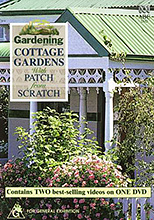 Patch From Scratch & Cottage Gardens, by Peter Cundall and Gardening Australia (DVD). This is a combination of two videos that used to be sold separately on VHS. The "Patch from Scratch" video is really, really good if you want to learn from scratch about how to grow vegetables organically. In Patch from Scratch, Peter Cundall shows you step-by-step how to start a vegetable garden, beginning with an ordinary suburban lawn. He goes through each season (some of then broken into early and late) for 18 months, describing everything in amazing detail. There is so much information in this video you could watch it 100 times and still learn more. The only real criticism of it I can think of is that it is so densely packed with information, your brain gets saturated after 10 or 15 minutes. So don't expect to take it all in in one sitting. I would recommend watching it through all the way just for an introduction, and then watch just the section for each month that you are up to, and do what he explains in that month/season.
Click here to purchase from Australia (Fishpond) $29.99 AUD |
Recommended Reading
|
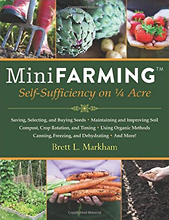 Mini Farming: Self-Sufficiency on 1/4 Acre, by Brett L. Markham. Start a mini farm on a quarter acre or less, provide 85 percent of the food for a family of four and earn an income.
Mini Farming describes a holistic approach to small-area farming that will show you how to produce 85 percent of an average family’s food on just a quarter acre — and earn $10,000 in cash annually while spending less than half the time that an ordinary job would require.
Even if you have never been a farmer or a gardener, this book covers everything you need to know to get started: buying and saving seeds, starting seedlings, establishing raised beds, soil fertility practices, composting, dealing with pest and disease problems, crop rotation, farm planning, and much more. Because self-sufficiency is the objective, subjects such as raising backyard chickens and home canning are also covered along with numerous methods for keeping costs down and production high. Materials, tools, and techniques are detailed with photographs, tables, diagrams, and illustrations.
Click here to purchase from Australia (Booktopia)
Click here to purchase from Australia (Fishpond)
Click here to purchase from Australia (The Nile)
Click here to purchase from Amazon
HOT This book is the #1 Best Seller in Gardening & Horticulture Reference on Amazon This book is the #1 Best Seller in Gardening & Horticulture Reference on Amazon |
See Also
Sustainable Organic Farming
Starting Your Own Box Garden
Getting Started With Container Gardening
Vegetable Gardening Books
Permaculture, Self Sufficiency And Sustainable Living Books
Return to Permaculture and Vegetable Gardening
Return to Site Map
compost garden soil
Content is copyright © Survival.org.au 2005-2026 All Rights Reserved. Terms of Use. Definitely read the disclaimer before trying anything from this website, especially including the practices and skills. This website uses affiliate links – this doesn't cost you any more, but I get a commission on purchases made through the website. As an Amazon Associate I earn similarly from qualifying purchases.
|